Published: 9 January 2026. Last reviewed: 9 September 2026.
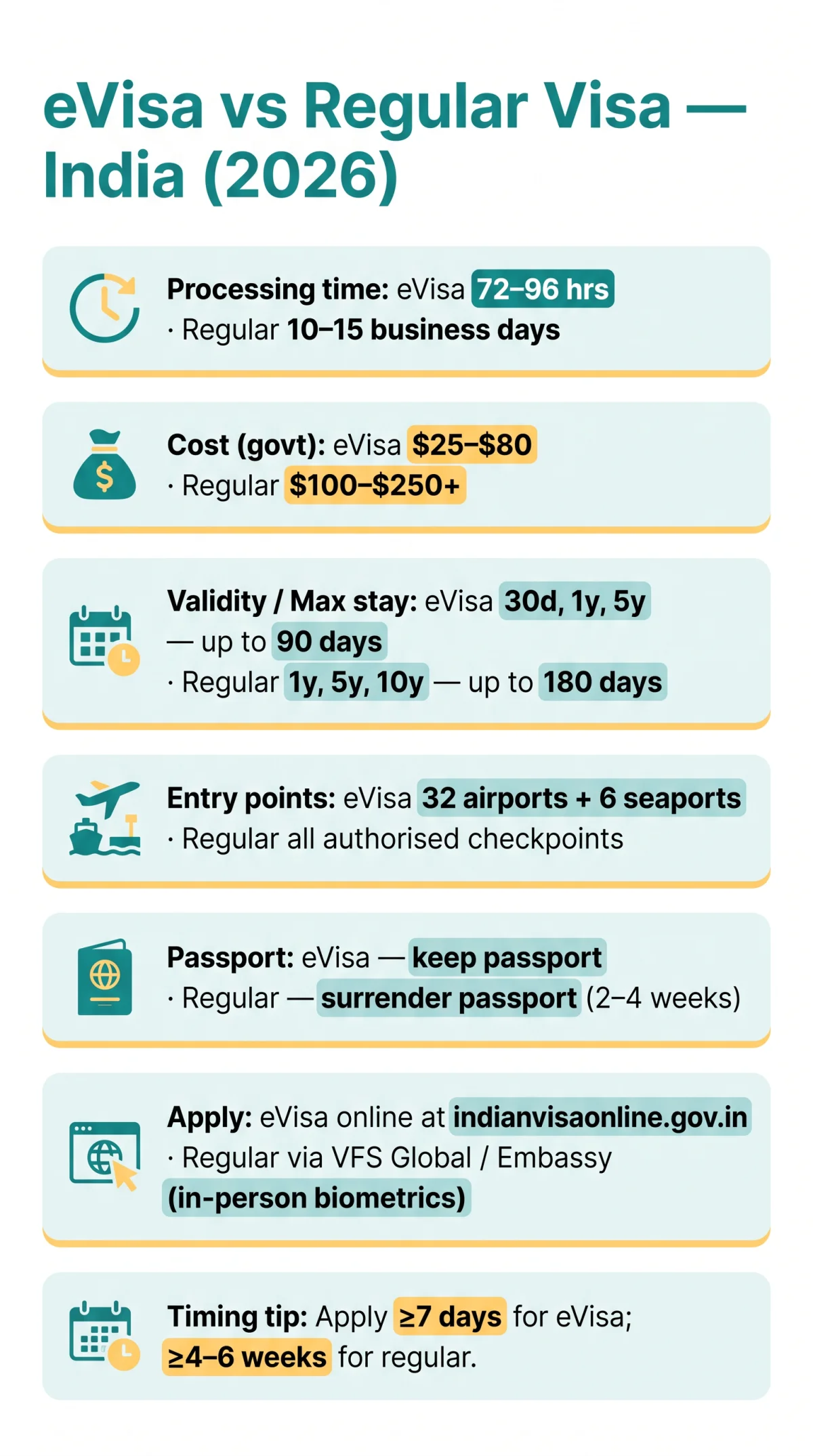
What is the difference between eVisa and regular visa for India? An India eVisa is applied for entirely online, costs $25 to $80, and is processed in 72 to 96 hours. A regular visa requires an embassy visit, costs $100 to $250+, and takes 10 to 15 business days. The eVisa restricts entry to 32 designated airports and 6 seaports, while a regular visa permits entry at all Indian border checkpoints.
For UK tourists planning a trip in 2026, understanding these distinctions is crucial for a smooth journey. The eVisa is fully digital, keeping your passport; a regular visa requires physical documents and biometrics at VFS Global. A regular visa offers up to 10-year validity and 180-day stays; an eVisa covers short tourism or business trips via 32 designated airports and 6 seaports.
What Is an eVisa for India?
An India eVisa is an Electronic Travel Authorisation (ETA) issued online by the Bureau of Immigration, Ministry of Home Affairs. It replaces the traditional sticker visa in your passport and is available across 5 categories in 2026: e-Tourist, e-Business, e-Conference, e-Medical, and e-Medical Attendant. Approval arrives by email; you print the ETA and present it at a designated port of entry where your passport is stamped. The application portal is indianvisaonline.gov.in.
eVisa vs Regular Visa: Quick Comparison Table
An India eVisa costs $25 to $80 with 72 to 96 hour processing, while a regular visa costs $100 to $250+ and takes 10 to 15 business days via VFS Global.
| Criterion | eVisa | Regular Visa |
|---|---|---|
| Processing time | 72 to 96 hours | 10 to 15 business days |
| Cost | $25 to $80 government fee | $100 to $250+ incl. consular surcharge |
| Validity | 30 days, 1 year, 5 years | 1 year, 5 years, 10 years |
| Max continuous stay | 30 or 90 days | Up to 180 days |
| Documents | Digital uploads | Physical originals + biometrics |
| Entry points | 32 airports + 6 seaports | All authorised checkpoints |
| Application method | Fully online | VFS Global centre visit |
Processing Time: eVisa vs Regular Visa in 2026
An India eVisa processes in 72 to 96 hours (3 to 4 business days), whereas a regular visa takes 10 to 15 business days through VFS Global or the embassy. According to the Indian Ministry of Home Affairs (indianvisaonline.gov.in), eVisa turnaround is fixed with no rush option. Regular visas offer an urgent mode processing in 1 to 3 business days for an additional fee. For a detailed breakdown of eVisa turnaround times, see our guide to Indian eVisa processing times in 2026.
Peak-season delays from October to March may extend both timelines. Missing documents and Indian public holidays also affect processing. Apply at least 7 days before departure for an eVisa, or 4 to 6 weeks ahead for a regular visa.
Cost Comparison: eVisa vs Regular Visa Fees in 2026
An India eVisa government fee ranges from $25 to $80, while a regular visa totals $100 to $250+ including consular surcharge and VFS Global service fee. For a full breakdown of every eVisa fee tier, read our complete guide to India eVisa costs in 2026.
eVisa government fees vary by category: e-Tourist 30-day costs $25, the 1-year option $40, the 5-year option $80, e-Business $80, and e-Medical $25. Regular visa fees range from $100 to $250 depending on duration, plus a VFS Global service fee of approximately £10 to £15 for UK applicants. The biometric fee is included in the VFS service charge.
For UK travellers, approximate totals are £20 to £65 for an eVisa versus £90 to £230 for a regular visa. USD figures are government base fees; GBP equivalents fluctuate with exchange rate and serve as guidance only. Payment methods: eVisa accepts card or digital payment; regular visa accepts card or cash at VFS.
Application Process: Online vs Embassy
An India eVisa application is 100% online through indianvisaonline.gov.in with no passport surrender, while a regular visa requires in-person biometric enrolment at a VFS centre.
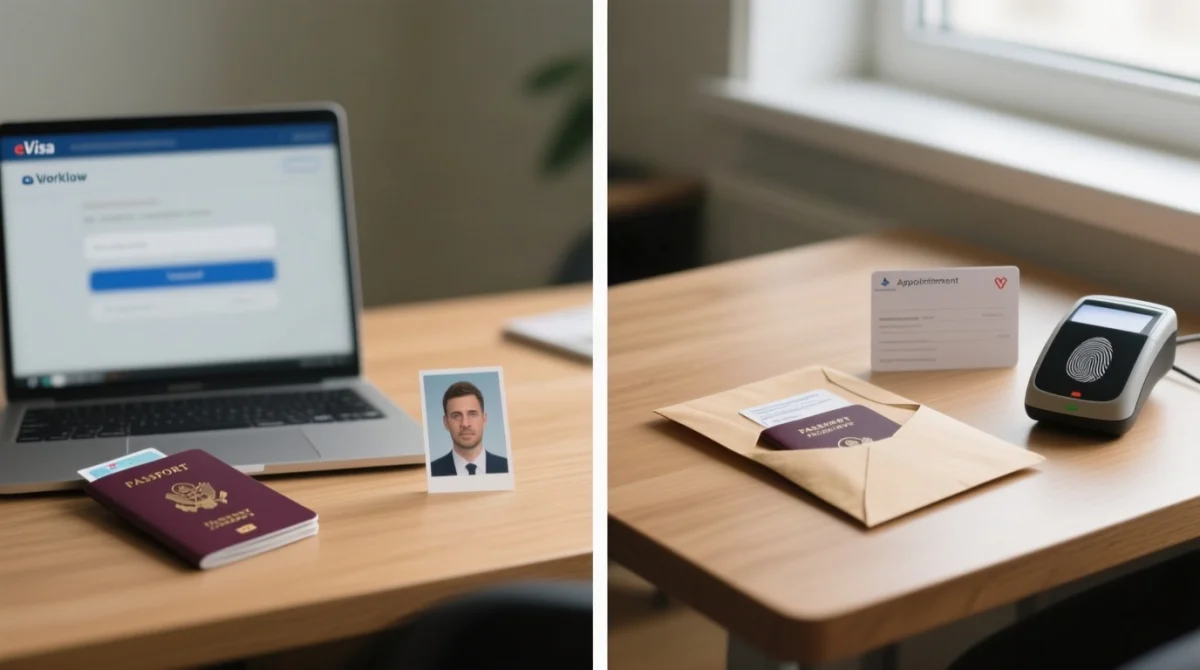
Step-by-Step: Applying for an eVisa
Visit the portal and select your visa type
Go to indianvisaonline.gov.in and select your visa type and nationality.
Complete the online form and upload documents
Fill in the form; upload your passport bio page (PDF, under 300 KB) and a square photo (JPEG, under 1 MB).
Pay the government fee
Pay the government fee ($25 to $80) by credit or debit card.
Receive your ETA by email
Your ETA arrives by email within 72 to 96 hours.
Print the ETA and present it at entry
Print the ETA and present it at a designated port of entry.
Step-by-Step: Applying for a Regular Visa
Complete and print the online form
Complete the online form at indianvisaonline.gov.in and print it.
Book an appointment
Book an appointment at a VFS Global centre (UK) or the Indian High Commission, London.
Attend in person
Attend in person to surrender your passport, provide biometric enrolment (fingerprints + photo), and pay the fee.
Wait for processing
Wait for processing (10 to 15 business days).
Collect your passport
Collect your passport with the visa sticker in person or by courier (additional fee).
Do You Need to Surrender Your Passport?
Key difference: eVisa lets you keep your passport; a regular visa requires surrendering it for 2 to 4 weeks. If you have other travel plans during processing, a regular visa creates a gap. The eVisa requires no physical document submission at any stage.
Visa Validity and Maximum Stay Limits
An India eVisa offers 30-day, 1-year, or 5-year validity with a maximum continuous stay of 90 days, while a regular visa allows up to 180 days per visit. To understand each validity tier in detail, see our guide to Indian eVisa validity periods in 2026.
| Visa Option | Validity | Max Stay Per Visit | Entries |
|---|---|---|---|
| eVisa 30-day | 30 days | 30 days | Single or double |
| eVisa 1-year | 1 year | 90 days | Multiple |
| eVisa 5-year | 5 years | 90 days | Multiple |
| Regular 1-year | 1 year | 180 days | Multiple |
| Regular 5-year | 5 years | 180 days | Multiple |
| Regular 10-year | 10 years | 180 days | Multiple |
Which Validity Tier Should You Choose?
- Single trip, under 30 days: eVisa 30-day ($25)
- Multiple trips within 12 months: eVisa 1-year ($40)
- Frequent visits over several years: eVisa 5-year ($80)
- Stays longer than 90 days or non-tourist purpose: regular visa (up to 180 days per visit)
Overstaying your visa validity period in India incurs penalties including fines, deportation, and potential future entry bans.
Entry Rules and Permitted Ports of Entry
An India eVisa permits entry through only 32 designated airports and 6 seaports, while a regular visa allows entry at all authorised land, sea, and air checkpoints. For the full list of permitted entry points, read our guide to designated airports, seaports and land borders for eVisa India.
eVisa designated airports include Delhi (DEL), Mumbai (BOM), Chennai (MAA), Kolkata (CCU), Bengaluru (BLR), Hyderabad (HYD), Ahmedabad, Kochi, Goa (Dabolim and Mopa), Jaipur, Lucknow, Amritsar, Trivandrum, Pune, Nagpur, Coimbatore, Bagdogra, Varanasi, Gaya, Guwahati, Mangaluru, Tiruchirapalli, Visakhapatnam, Chandigarh, Madurai, Bhubaneswar, Port Blair, Kannur, Calicut, Surat, Patna, and Indore.
eVisa designated seaports (6 total): Mumbai, Goa (Mormugao), Mangalore, Cochin, Chennai, and Kolkata. Land border crossings from Nepal, Bangladesh, Bhutan, or Myanmar are not accessible with an eVisa.
A regular visa permits entry at all authorised checkpoints including land borders such as Wagah/Attari with Pakistan and crossings into Nepal and Bangladesh. If you plan a side trip to Nepal or Sri Lanka with a return to India, a regular visa with multiple entry is the safer option, as an eVisa may not permit re-entry depending on the category.
Documents Required: eVisa vs Regular Visa
An India eVisa requires digital uploads of a passport scan (PDF, under 300 KB) and a square photo (JPEG, under 1 MB), while a regular visa demands physical originals and two 5×5 cm prints. For exact dimensions and background rules, see our eVisa India photo requirements guide for 2026.
| Requirement | eVisa | Regular Visa |
|---|---|---|
| Passport validity | Min. 6 months from arrival | Min. 6 months from arrival |
| Blank pages | Min. 2 | Min. 2 |
| Passport submission | No (digital scan only) | Yes (physical booklet) |
| Photo | JPEG, square, under 1 MB | 2 prints, 5×5 cm, white background |
| Passport scan | PDF, bio page, under 300 KB | Not required (original surrendered) |
| Travel proof | Flight itinerary (upload) | Flight booking (printout) |
| Hotel/invitation | Upload or provide details | Original letter or hotel confirmation |
| Notarisation | Not required | Sometimes required for supporting docs |
Common to both: passport must be valid for minimum 6 months from arrival date with minimum 2 blank pages.
Who Can Apply? Eligibility and Visa Categories
An India eVisa is available to approximately 160 nationalities across 5 categories, while a regular visa is mandatory for employment, student, research, and journalist travel purposes. UK citizens are eligible for eVisa; Pakistan nationals are generally ineligible, and some restrictions apply to Chinese nationals. For the full criteria, see our complete guide to Indian eVisa eligibility for UK travellers.
eVisa categories (5): e-Tourist, e-Business, e-Conference, e-Medical, e-Medical Attendant. Regular visa categories are broader: Tourist, Business, Employment, Student, Research, Journalist, Transit, Conference, Diplomatic, and Medical (longer-term).
- Tourism or sightseeing, under 90 days: eVisa eligible
- Business meetings or conferences: eVisa eligible
- Medical treatment (short-term): eVisa eligible
- Employment or internship: regular visa only
- University enrolment: regular visa only
- Journalist or media work: regular visa only
- Stays over 90 continuous days: regular visa only
Can You Extend or Convert an eVisa? Which Visa Should You Choose?
An India eVisa is non-extendable and non-convertible within India, whereas a regular visa can be extended through the FRRO (Foreigners Regional Registration Office) before expiry. FRRO extension processing takes approximately 7 to 15 business days. Overstaying any visa incurs financial penalties, deportation, and potential future entry bans to India.
| Scenario | Recommended Visa | Why |
|---|---|---|
| Single holiday, under 30 days | eVisa 30-day ($25) | Cheapest, fastest (72 to 96 hrs), no passport surrender |
| Multiple trips within 12 months | eVisa 1-year ($40) | Multiple entry, 90 days per visit |
| Frequent travel over 2 to 5 years | eVisa 5-year ($80) | Long validity, multiple entry |
| Stay longer than 90 days | Regular visa | Only option for 90+ day continuous stay (up to 180 days) |
| Entry via land border (Nepal, Bangladesh) | Regular visa | eVisa not accepted at land crossings |
| Employment, study, research, journalism | Regular visa | eVisa does not cover these purposes |
Visa fees and processing times are subject to change. Always verify on the indianvisaonline.gov.in portal before applying.
Frequently Asked Questions: India eVisa vs Regular Visa
Is an eVisa the same as a regular visa for India?
No. An eVisa is an electronic authorisation applied for online; a regular visa is a physical sticker issued by an embassy. They differ in cost, processing time, validity, entry ports, and permitted duration of stay.
How much does an India eVisa cost for UK citizens in 2026?
The government fee ranges from $25 (30-day e-Tourist) to $80 (e-Business or 5-year e-Tourist). For UK travellers, the total cost is approximately £20 to £65 with no VFS or consular surcharges.
Can I enter India by land with an eVisa?
No. An eVisa is valid only at 32 designated airports and 6 seaports. Land border crossings from Nepal, Bangladesh, Bhutan, or Myanmar require a regular visa.
How long does it take to get an India eVisa?
Standard processing takes 72 to 96 hours (3 to 4 business days) with no express option. Apply at least 7 days before departure.
Can I extend my India eVisa while in the country?
No. An eVisa cannot be extended or converted within India. You must leave before the maximum continuous stay expires and re-apply if needed.
Do I need to submit my passport for an India eVisa?
No. The eVisa is entirely digital. You upload a scanned copy of your passport bio page but retain the physical booklet throughout.
Can I get a visa on arrival instead of an eVisa?
Visa on Arrival in India is available only to citizens of Japan, South Korea, and the UAE (with restrictions). UK citizens must apply for an eVisa or regular visa before travel.
Which is better for a first-time visitor, eVisa or regular visa?
For a standard holiday under 90 days via a major airport, choose the eVisa ($25 to $80, 72 to 96 hours). A regular visa is needed only for stays over 90 days, land-border entry, or work or study.